
I have had assignments where the hardest part was not finding something to say, but figuring out how much needed to be said. A professor asking for 1,200 words gives me a very different target from one asking for five double-spaced pages, especially when formatting rules are involved. That made me curious about whether an online writing service could handle those requirements accurately rather than simply producing a paper that was roughly the right length.
After looking at how EssayPay structures its orders, my answer is yes. A specific word count can be entered as part of the assignment requirements, and the service also takes page-related requirements into account when relevant. If I wanted to learn how to get custom essay help from EssayPay, I would start by giving the exact target rather than relying on a vague instruction such as “make it around five pages.” The more precise the order details are, the less room there is for confusion later.
That sounds straightforward, but there is an important distinction between word count and page count that I think is worth understanding before placing an order.
Why I would choose words over pages when I have the option
When a professor says “1,500 words,” I know exactly what the target means. When the instruction says “five pages,” things become less predictable.
Font, font size, line spacing, margins, paragraph spacing, headings, quotations, and reference formatting can all change how many pages a particular number of words occupies. A 1,500-word essay in 12-point Times New Roman with double spacing will not necessarily occupy the same number of pages as the same text in another formatting setup.
That is why I pay closer attention to a professor's actual wording. If the assignment specifies a word count, I would enter that exact number. If the professor specifies pages instead, I would provide the formatting requirements as well.
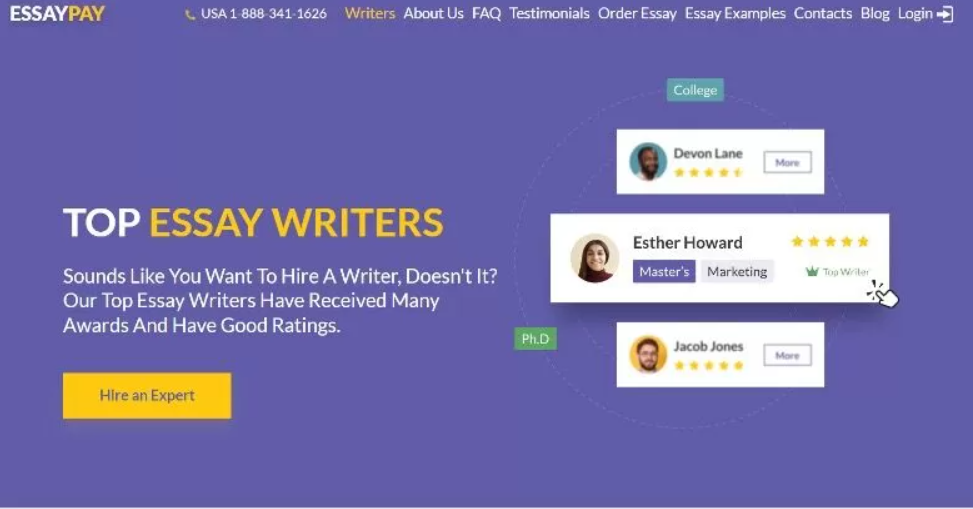
EssayPay's ordering process allows students to specify the paper type, subject, academic level, deadline, and desired length. Its information about ordering also indicates that students can provide detailed instructions and upload supporting materials. That gives me enough control to explain whether the assignment has a strict word limit, a page requirement, or some flexibility.
For example, I would not write “approximately five pages” if the syllabus says “4 to 5 pages, double-spaced, excluding references.” I would copy that requirement into the instructions. Small differences in wording can matter.
A word count is not the same as usable content
There is another issue I pay attention to when judging whether an essay actually meets the assignment requirement.
Suppose I need 1,500 words. Technically reaching that number is easy if I add long introductions, repeat the same point in different language, or stretch paragraphs that should have been shorter. That would satisfy a counter while making the essay worse.
When I evaluate a paper against a word requirement, I want the additional words to do something useful. A new paragraph should develop the argument, introduce relevant evidence, explain an example, address a counterargument, or move the discussion forward.
I have made this mistake myself. Earlier in my academic writing, I sometimes treated the word count as a number I had to reach before submitting. That mindset encouraged me to pad sections when I was 200 words short. Eventually I realized that being short usually meant I had not developed an important part of the argument well enough.
That is one reason I would include the assignment prompt and grading rubric when requesting writing assistance. The writer can then see why the paper needs to be a particular length rather than treating the number as an isolated target.
What I would put in the order
If I needed a custom paper with a strict length, I would make the instruction unusually clear.
For instance, imagine that my professor assigned a 2,000-word analytical essay on the economic effects of remote work. I would specify the academic level, the exact topic, the required word count, the citation style, the deadline, and any restrictions on sources. If the professor said the bibliography did not count toward the word limit, I would state that too.
I would also attach the original assignment instructions if possible.
This matters because “2,000 words” can mean different things depending on the institution or instructor. Some professors count everything except the references. Others may have specific rules for quotations, headings, or footnotes. I would rather provide the actual instructions than assume that a writer knows my professor's convention.
EssayPay says students can upload files such as assignment prompts, grading criteria, notes, articles, and other relevant materials. That is particularly useful when the length requirement appears in a document rather than in a simple order field.
The same principle applies when the requirement is expressed in pages. I would include the requested formatting instead of expecting the writer to guess it.
The page count can change after formatting
This is where I would be careful about checking the finished document.
Imagine I receive an essay that appears to be exactly five pages on my screen. Then I change the font from 11 to 12 points because my professor requires it. Suddenly it becomes six pages.
That does not necessarily mean the writer ignored the requirement. It can simply mean that the page count was dependent on formatting.
For that reason, I consider page count a formatting issue as much as a writing issue. If my professor has strict page requirements, I would check the document using the exact formatting rules before submitting it.
I would also check whether headings, quotations, tables, and references are included in the professor's count. These details can make a noticeable difference in longer assignments.
If the requirement is stated in words, I would use the word count as my primary check. If it is stated in pages, I would reproduce the professor's formatting conditions before judging whether the document fits.
What happens when I need a range rather than an exact number?
This is actually easier.
If the instruction says 1,200 to 1,500 words, I would treat the range as meaningful rather than aiming for 1,500 automatically. There is little reason to add unnecessary material simply because the upper limit exists.
I tend to aim somewhere comfortably inside the permitted range. If I need 1,200 to 1,500 words, something around 1,350 or 1,400 may give me enough room to develop the argument without creating pressure to fill every available word.
Of course, the right length depends on the assignment. A research-heavy paper may naturally need more space than a short reflective response. The content should determine where the essay lands within the permitted range.
That is also why I would distinguish between a minimum and a maximum. “At least 1,500 words” is very different from “1,500 words maximum.” I would make sure that distinction is explicit in the order.
I would still check the final count myself
Even when I use writing assistance, I would never submit the document without checking the length against the original assignment.
EssayPay provides writing tools and educational resources that can also be useful for reviewing academic work. A word counter, for example, can help me verify the total after I make my own edits.
That last part is important because I may change the document after receiving it. If I remove a paragraph, rewrite a section, add a quotation, or insert material from my own research, the original word count is no longer the final word count.
I think of the first delivered version as a starting point for review rather than a document that I should accept without checking. That approach also gives me a chance to catch something more important than the number itself: whether the paper actually answers the assignment.
A specific example from the way I would handle an order
If I had an undergraduate history assignment requiring 1,800 words, I might initially write an instruction such as:
“Write an 1,800-word analytical essay about the causes of the French Revolution.”
That is better than giving no length at all, but I would still consider it incomplete.
A stronger version would explain the professor's question, required sources, citation style, academic level, deadline, and whether the bibliography counts toward the word limit. If there is a grading rubric, I would attach it.
Suppose the professor specifically wants comparison of economic, political, and social factors. I would say that. Otherwise, the writer might spend most of the available words on one factor and leave too little room for the others.
This is where I see the real value of specifying the length. The number itself helps establish the available space for the argument, but the assignment instructions determine how that space should be used.
What I would do if the paper is too long
I would not simply start deleting random sentences.
First, I would identify repetition. Academic papers often contain several sentences making essentially the same point. Removing that duplication can reduce the word count while improving the argument.
Then I would look at examples and background information. If a paragraph gives three examples but one is enough to support the point, I might remove two. I would also check whether the introduction is taking up space that could be used more effectively in the analysis.
The same approach works in reverse when a paper is too short. Instead of adding filler, I would look for an underdeveloped argument, missing evidence, an unexplained example, or a counterargument that deserves attention.
That is a much more reliable way to control length.
My takeaway about custom word counts
Yes, EssayPay can work with specific length requirements, and I would be comfortable giving an exact word count when placing an order. The important part is making the requirement unambiguous and supplying the formatting instructions when the professor measures the assignment by pages.
I would also keep one distinction in mind: meeting a number is only useful if the paper uses that space effectively. A 1,500-word essay that repeats itself is weaker than a focused paper that uses every paragraph to advance the argument.
For my own assignments, I would therefore provide the exact word or page requirement, upload the professor's instructions, explain any special counting rules, and check the final document using the same formatting requirements before submitting it. That takes only a few minutes and removes much of the uncertainty around whether the finished paper actually fits the assignment.
Related Reading
Why a Comfortable Study Space Boosts Student Success — and How to Create One
Metal Music Makes Essay Writing Better: Science-Backed StudyHacks
How to choose the right MBA course?
Two Top Paper Writing Services Reviewed













Write a comment ...