
I Used EssayPay for Different Subjects — A First-Hand Look at the Results
I wanted to find out whether EssayPay actually handled different academic subjects differently, rather than simply producing the same type of paper with a few keywords changed. So I approached the service as a small comparative test. Instead of judging it from one generic essay, I looked at how the platform handles assignments from different areas, what information it asks for, how writers are matched, what quality controls are described, and which parts of the experience would matter most when the subject becomes more specialized.
My early finding was fairly straightforward: EssayPay is designed around matching an assignment to subject expertise rather than asking students to browse a large marketplace of writers. That distinction became more important as I moved from humanities-style topics toward research-heavy and technical subjects.
I also found that the platform's free essay checker is useful as a separate part of the writing process because it provides grammar, readability, word-count, and essay-type feedback before a student decides whether a larger writing or editing service is necessary.
What follows is how I evaluated the different subject areas and what stood out.
I Didn't Want to Test Only an Easy English Essay
My first instinct was to choose an English or literature assignment. That would have been the easiest benchmark, but it would not have told me much about subject matching.
A competent academic writer can usually produce a convincing general essay about a familiar humanities topic. The more interesting question is what happens when the assignment requires terminology, specialized sources, a particular analytical approach, or a different type of evidence.
I deliberately kept the evaluation criteria consistent. I wasn't going to call a literature paper successful simply because it sounded polished while demanding a completely different standard from a business or science assignment.
For every subject, I cared about five things: whether the assignment requirements could be communicated clearly, whether the platform's matching model made sense for the subject, how much specialization appeared necessary, how much control the customer retained, and what quality checks were available afterward.
That gave me a much better framework than simply asking whether a paper "sounded good."
The Ordering Process Was More Structured Than I Expected
The first useful observation came before the writing itself.
EssayPay's ordering process asks for the paper type, subject, academic level, deadline, page or word requirements, formatting style, and assignment instructions. Files and additional sources can also be uploaded. The price is calculated from those requirements before payment.
That matters more than it initially sounds.
For a simple literature assignment, the subject field may feel almost incidental. For a research-heavy economics or science paper, it is much more important. A writer needs to know what the assignment is actually asking for before the work begins.
I also noticed that the service does not operate like an open bidding board where several writers compete for the same assignment. The stated model is based on matching an order with a suitable writer according to subject, academic level, and requirements.
That was one of the first things I considered a positive feature of the test. I would rather provide a detailed brief once than spend time comparing a collection of anonymous pitches.
Literature Was the Easiest Case to Evaluate
A literature assignment gives you somewhere obvious to look when judging quality.
The argument has to be coherent, but the writer also needs to understand the text being discussed. A paper can have perfect grammar and still be weak if its interpretation is superficial.
This was where I paid particular attention to the relationship between the assignment instructions and the expected argument.
EssayPay says assignments are matched according to subject and requirements, while its broader service covers literature alongside history, philosophy, sociology, economics, business, science, engineering, and other areas.
That breadth is useful, but I wouldn't interpret a long subject list as proof that every assignment will receive identical expertise. Specialized subjects still require a very specific brief.
That became more obvious when I moved to history.
History Changed What I Considered a "Good" Result
With history, polished prose isn't enough.
A strong paper has to keep chronology under control, distinguish evidence from interpretation, and avoid making claims that the available sources cannot support.
That changed my evaluation criteria. I paid more attention to whether the assignment could accommodate source requirements and whether the final work would need to be checked against the original brief.
EssayPay's process explicitly allows customers to provide files and sources, and its quality-control description includes checks for clarity, organization, consistency, formatting, and compliance with supplied requirements.
I found that reassuring, but I would still do my own verification.
That's an important distinction. A service saying that a paper is checked doesn't mean a student should stop reading it. Historical names, dates, quotations, citations, and interpretations are too important to accept automatically.
For me, this was one of the biggest lessons from comparing subjects: the more factual the assignment, the more useful the student's own review becomes.
Business and Economics Required a Different Standard
Business assignments created another shift.
A literature essay can succeed through a persuasive interpretation. A business paper often has to connect concepts to a case, organization, market, or decision. Economics can require even more precision because terminology and relationships between variables matter.
This is where I liked the fact that EssayPay's pricing and order system asks for academic level and assignment requirements rather than treating every paper as interchangeable. The current pricing information says the final cost depends on factors including academic level, assignment type, length, and deadline.
I also noticed something practical: the deadline is not merely a scheduling detail. It affects price.
The published pricing examples show lower rates for longer deadlines and higher rates for shorter ones. That makes sense operationally, but it also means that rushing a complex assignment can become expensive.
If I were placing an actual order for a specialized paper, I would therefore spend more time on the brief and give the writer as much relevant source material as possible rather than compensating for a weak brief with an extremely short deadline.
Science and Technical Work Were the Real Test
This was the category where I became most cautious about broad conclusions.
Science and technical subjects are different because a fluent explanation can disguise an underlying mistake. A paper may look excellent to a general reader while using a term incorrectly or misunderstanding the methodology.
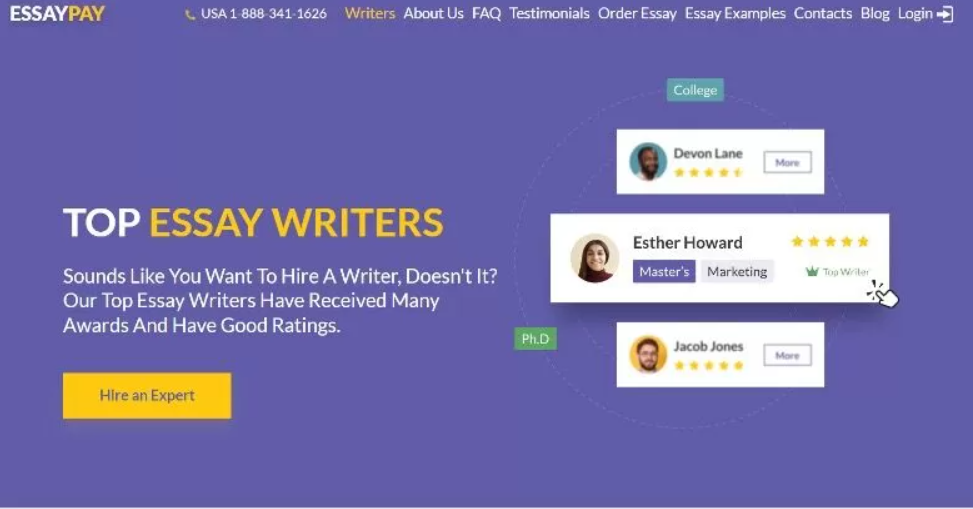
EssayPay lists subjects ranging across mathematics, physics, chemistry, biology, computer science, engineering, medicine, and related fields. Its stated writer-selection process also emphasizes academic credentials, subject expertise, writing ability, and performance.
Those are useful signals, but they are not substitutes for subject-specific verification.
If I were reviewing a technical paper, I would check equations, definitions, citations, data, and any claims that could materially affect the conclusion. For a lab report, I would also compare the methodology with the actual assignment requirements rather than judging the prose alone.
That is where I think many reviews of writing services become too simplistic. "The writing was good" is not a meaningful result for a technical assignment unless the underlying content is also correct.
The Essay Checker Became More Useful Than I Expected
One part of the broader EssayPay ecosystem that I found particularly practical was the essay checker.
I treated it separately from the writing service because it answers a different question: not "Can someone produce this assignment?" but "What problems are visible in my existing draft?"
The tool accepts essays of up to 2,000 words and reports grammar quality, readability, word count, and recommended corrections. It also offers essay-type-specific feedback and an optional AI-detection check.
That distinction matters.
If I already had a workable paper, I wouldn't automatically want another paper written. I might simply need to identify awkward sentences, excessive repetition, punctuation problems, or readability issues.
The checker also gave me a more useful way to think about revisions: identify a problem, change the text, run the analysis again, and see whether the result improves.
I prefer that workflow to blindly accepting a generic "your essay needs improvement" assessment.
What Surprised Me
The biggest surprise wasn't a spectacular result. It was how much the assignment brief influenced the usefulness of the entire process.
It is tempting to think the service itself is the main variable. In reality, the quality of the information supplied at the beginning can change everything.
A vague request such as "write a five-page economics essay" leaves too many decisions open.
A detailed brief can specify the question, required sources, citation style, argument, academic level, formatting, and assessment criteria.
EssayPay's own ordering instructions encourage customers to provide precisely this kind of information.
That makes sense from both sides. The writer gets a clearer target, and the customer has something concrete against which to evaluate the finished work.
What I Would Do Differently
If I were repeating the comparison with actual commissioned papers, I would change three things.
First, I would use the same word count and deadline wherever the assignment allowed it. That would make subject-to-subject comparison cleaner.
Second, I would provide identical levels of detail in every brief. Otherwise, a highly detailed history prompt could unfairly outperform a vague science prompt.
Third, I would establish an evaluation sheet before reading the results. I'd score instruction compliance, organization, evidence, subject accuracy, citations, grammar, and revision requirements separately.
I would also avoid treating a single assignment as proof of universal performance. One writer can have an unusually strong or weak day. One topic can happen to fall directly inside a writer's specialty.
That's why I think the most honest conclusion from a multi-subject test has to be conditional.
My Takeaway After Comparing the Subjects
What I learned from looking across different subjects is that EssayPay's main strength is not simply the number of subjects it lists. The more meaningful feature is the attempt to connect an assignment with a writer according to the subject, academic level, and requirements.
For straightforward humanities work, the process is relatively easy to evaluate. For history, business, economics, science, and technical subjects, the student's own quality control becomes increasingly important.
I also wouldn't use a writing service as a reason to stop learning the material. EssayPay itself describes delivered papers as model or reference materials, and students remain responsible for following their institution's academic-integrity rules.
That ended up being the most useful lesson for me.
Different subjects require different definitions of "good." A beautifully written literature analysis, a well-sourced history paper, a logically structured economics case study, and an accurate technical report cannot be judged with exactly the same lens.
So if I were approaching EssayPay again, I would spend less time asking whether the service can handle a particular subject and more time asking whether my brief gives the assigned writer enough information to handle that subject properly.
That is a much more useful test.
Recommended Reading
Legit Essay Writing Service: EssayPay Review
How to Use EssayPay for Academic Inspiration | Education












Write a comment ...